Synergy LED is the leader in Solid State LED Lighting, LED Light Bulbs, LED Fixtures and LED Lighting Solutions



Products

In The Spotlight
Warranty


| © 2009 Synergy-LED.com Bradenton, Florida 34203 | All Rights Reserved Google | The LED Lighting Super Store | Synergy-LED is your LED Light Bulb Leader |
| Contact Us l Privacy Policy l Terms & Conditions l LED Leasing l Shipping Info l Employment l Newsletter |

| Synergy-LED.com offers the highest level of quality in all of our LED Light Bulbs, LED Light Fixtures, and LED lighting Products. We feature name brand products from the industry leaders in LED solid state lighting technology. Every LED product featured on Synergy-LED.com has been thoroughly tested by engineering staff to ensure that only the highest quality LED lighting products are brought to our clients. We feature LED lighting products from Cree® , Halco Proled, Superior Life®, Ushio LED, Feit LED, Plusrite LED, EcoStory LED, Sonlite, Nichia LED, and many more. Synergy-LED.com is your Super Store For all LED Light Bulbs! |

| © 2009 Synergy-LED.com Bradenton, Florida 34203 | All Rights Reserved Google | The LED Lighting Super Store | Synergy-LED is your LED Light Bulb Leader |
| Synergy-LED.com offers the highest level of quality in all of our LED Light Bulbs, LED Light Fixtures, and LED lighting Products. We feature name brand products from the industry leaders in LED solid state lighting technology. Every LED product featured on Synergy-LED.com has been thoroughly tested by engineering staff to ensure that only the highest quality LED lighting products are brought to our clients. We feature LED lighting products from Cree® , Halco Proled, Superior Life®, Ushio LED, Feit LED, Plusrite LED, Diogen, MSI, EcoStory LED, Sonlite, Nichia LED, and many more. Synergy-LED.com is your Super Store For all LED! Synergy-LED.com is owned and operated by Synergy Lighting, Inc. |
Why shop for your LED lighting at Synergy LED?
With phenomenal energy savings and extremely long life, consumers are starting to realize the financial benefits of switching to
LED lighting. Reductions in labor and maintenance make LED a winning combination in todays business. Today there are a
tremendous amount of LED products, and it is often difficult to know which LED products are quality and which is right for your
business. Synergy has been a leader in commercial lighting for over a decade. Our goal at Synergy LED is to offer only the best
quality LED lighting products at great prices from leading manufacturers. Customer service and expert assistance is our #1
priority as well a being a company you can always depend on. We make it easy to find what you need, understand the product
and are always willing to help you by phone (1-877-220-5483) if you have additional questions or need our expert assistance.
Not all LED light bulbs or lighting products are created equal, and there are a lot of inferior LED lighting products in the
marketplace just waiting to disappoint you. Claims of LED bulb life and energy savings are often overstated by manufacturers
and retailer alike. Further, with the growth of this technology, it is not uncommon for some manufactures to fall by the wayside in
time. It is especially important to buy LED products made by long standing industry leaders, and from a LED lighting site that
stands behind their products 100% with full manufacturer support. We are committed to helping you buy what is best for you.
Every LED product featured on our site has been field tested by our Commercial and ALA (American Lighting Association)
Certified Lighting Specialists. All though Synergy LED would like to provide you with every possible bulb, we can not simply
because many do not meet our standards for use in commercial lighting. If you don't find the LED product you are looking for,
please give us a call and we will gladly find the item for you or refer you to another reputable company.
What is LED the right choice to make?
LED lights are the first viable lighting source that is environmentally friendly and does not deplete our valuable resources. Energy
efficient LED lighting can reduce your energy costs due to lighting by 90% while also reducing carbon dioxide emissions, crude
oil consumption and the number of required power plants. Another great benefit is that LED bulbs can last up to 60,000 hours,
meaning you’ll only have to change a light bulb every 15 to 24 years. It is the quickest and easiest way to implement green energy
alternatives in your home or business and it won’t be long until everyone is using ENERGY STAR rated LED lighting (for more on
this topic, click here: ENERGY STAR SSL Website). Quite frankly, choosing LED increases positive cash flow and protects our
environment.
*Money back guarantee policy – any product can be returned undamaged in original package within 30 days for a full refund.
With phenomenal energy savings and extremely long life, consumers are starting to realize the financial benefits of switching to
LED lighting. Reductions in labor and maintenance make LED a winning combination in todays business. Today there are a
tremendous amount of LED products, and it is often difficult to know which LED products are quality and which is right for your
business. Synergy has been a leader in commercial lighting for over a decade. Our goal at Synergy LED is to offer only the best
quality LED lighting products at great prices from leading manufacturers. Customer service and expert assistance is our #1
priority as well a being a company you can always depend on. We make it easy to find what you need, understand the product
and are always willing to help you by phone (1-877-220-5483) if you have additional questions or need our expert assistance.
Not all LED light bulbs or lighting products are created equal, and there are a lot of inferior LED lighting products in the
marketplace just waiting to disappoint you. Claims of LED bulb life and energy savings are often overstated by manufacturers
and retailer alike. Further, with the growth of this technology, it is not uncommon for some manufactures to fall by the wayside in
time. It is especially important to buy LED products made by long standing industry leaders, and from a LED lighting site that
stands behind their products 100% with full manufacturer support. We are committed to helping you buy what is best for you.
Every LED product featured on our site has been field tested by our Commercial and ALA (American Lighting Association)
Certified Lighting Specialists. All though Synergy LED would like to provide you with every possible bulb, we can not simply
because many do not meet our standards for use in commercial lighting. If you don't find the LED product you are looking for,
please give us a call and we will gladly find the item for you or refer you to another reputable company.
What is LED the right choice to make?
LED lights are the first viable lighting source that is environmentally friendly and does not deplete our valuable resources. Energy
efficient LED lighting can reduce your energy costs due to lighting by 90% while also reducing carbon dioxide emissions, crude
oil consumption and the number of required power plants. Another great benefit is that LED bulbs can last up to 60,000 hours,
meaning you’ll only have to change a light bulb every 15 to 24 years. It is the quickest and easiest way to implement green energy
alternatives in your home or business and it won’t be long until everyone is using ENERGY STAR rated LED lighting (for more on
this topic, click here: ENERGY STAR SSL Website). Quite frankly, choosing LED increases positive cash flow and protects our
environment.
*Money back guarantee policy – any product can be returned undamaged in original package within 30 days for a full refund.





LED Light Bulbs
LED Fixtures
LED Specialty
Household A19 LED
Chandelier LED
Globe Shape LED
Tubular Shape LED
Bi-Pin 12V LED
T8 LED
MR11 LED
MR16 LED
PAR16 LED
PAR20 LED
PAR30 LED
PAR38 LED
Specialty LED
Color Changing LED
Chandelier LED
Globe Shape LED
Tubular Shape LED
Bi-Pin 12V LED
T8 LED
MR11 LED
MR16 LED
PAR16 LED
PAR20 LED
PAR30 LED
PAR38 LED
Specialty LED
Color Changing LED
LED Recessed Lights
LED Flood Light
LED Wall Packs
LED Canopy Lights
LED Security Lights
LED Under Cabinet
LED Pole & Parking Lot
LED Bollard
LED Landscape
LED Flood Light
LED Wall Packs
LED Canopy Lights
LED Security Lights
LED Under Cabinet
LED Pole & Parking Lot
LED Bollard
LED Landscape
LED Drivers
LED Education from Synergy-LED.com
What is an LED?
An LED is a semiconductor chip that generates light when current is applied in the right
conditions, which is very different from any other technology currently used in lighting. These
chips (known as dies), are assembled in a structure that helps support and protect the dies
and the electrical connections. This structure is generally known as a package. Depending
on the type of LED package and the desired characteristics, there may be one or more LED
dies per package. The different types of LED packages have different strengths and
weaknesses that impact the package’s applicability in lighting. Of note, LEDs are more
sensitive to operating temperature than other types of lighting, and anything from lifetime to
acceptable current to chromaticity can be impacted by the operating temperature.
conditions, which is very different from any other technology currently used in lighting. These
chips (known as dies), are assembled in a structure that helps support and protect the dies
and the electrical connections. This structure is generally known as a package. Depending
on the type of LED package and the desired characteristics, there may be one or more LED
dies per package. The different types of LED packages have different strengths and
weaknesses that impact the package’s applicability in lighting. Of note, LEDs are more
sensitive to operating temperature than other types of lighting, and anything from lifetime to
acceptable current to chromaticity can be impacted by the operating temperature.

Are there different types of LED?
There are currently over 500 different types of quality LED chips in todays market place. This can be confusing when a
consumer sees multiple LED products with largely varied prices, shapes, sizes and looks. Often times when looking at
LED products, customers will see the words "CREE Chips". At our last count, Cree (Largest US Manufacturer - Publicly
traded in the NYSE), or Nichia (Largest Asian Manufacturer) each manufacturers over 80 different chips. The best way to
divide these LED chips is to classify them as Low Power LED and High Power LED. So in essence, just because a
manufacturer claims to have Cree or Nichia or another brand LED Chip, does not mean that the LED product you are
purchasing is of the "Light Quality" that you would expect to be purchasing. For this we must reference to the lumens per
watt (LPW), which measures the brightness of the product to its energy consumption. The next step is to measure the
quality of manufacturing involved, i.e welds and heat management. The final step is choosing an appropriate color of light
being produced, and the beam spread of the product through the quality of optics used to disperse and focus the light.
consumer sees multiple LED products with largely varied prices, shapes, sizes and looks. Often times when looking at
LED products, customers will see the words "CREE Chips". At our last count, Cree (Largest US Manufacturer - Publicly
traded in the NYSE), or Nichia (Largest Asian Manufacturer) each manufacturers over 80 different chips. The best way to
divide these LED chips is to classify them as Low Power LED and High Power LED. So in essence, just because a
manufacturer claims to have Cree or Nichia or another brand LED Chip, does not mean that the LED product you are
purchasing is of the "Light Quality" that you would expect to be purchasing. For this we must reference to the lumens per
watt (LPW), which measures the brightness of the product to its energy consumption. The next step is to measure the
quality of manufacturing involved, i.e welds and heat management. The final step is choosing an appropriate color of light
being produced, and the beam spread of the product through the quality of optics used to disperse and focus the light.
Are there different types of LED?
There are currently over 500 different types of quality LED chips in todays market place. This can be confusing when a
consumer sees multiple LED products with largely varied prices, shapes, sizes and looks. Often times when looking at
LED products, customers will see the words "CREE Chips". At our last count, Cree (Largest US Manufacturer - Publicly
traded in the NYSE), or Nichia (Largest Asian Manufacturer) each manufacturers over 80 different chips. The best way to
divide these LED chips is to classify them as Low Power LED and High Power LED. So in essence, just because a
manufacturer claims to have Cree or Nichia or another brand LED Chip, does not mean that the LED product you are
purchasing is of the "Light Quality" that you would expect to be purchasing. For this we must reference to the lumens per
watt (LPW), which measures the brightness of the product to its energy consumption. The next step is to measure the
quality of manufacturing involved, i.e welds and heat management. The final step is choosing an appropriate color of light
being produced, and the beam spread of the product through the quality of optics used to disperse and focus the light.
consumer sees multiple LED products with largely varied prices, shapes, sizes and looks. Often times when looking at
LED products, customers will see the words "CREE Chips". At our last count, Cree (Largest US Manufacturer - Publicly
traded in the NYSE), or Nichia (Largest Asian Manufacturer) each manufacturers over 80 different chips. The best way to
divide these LED chips is to classify them as Low Power LED and High Power LED. So in essence, just because a
manufacturer claims to have Cree or Nichia or another brand LED Chip, does not mean that the LED product you are
purchasing is of the "Light Quality" that you would expect to be purchasing. For this we must reference to the lumens per
watt (LPW), which measures the brightness of the product to its energy consumption. The next step is to measure the
quality of manufacturing involved, i.e welds and heat management. The final step is choosing an appropriate color of light
being produced, and the beam spread of the product through the quality of optics used to disperse and focus the light.
What are low power LED's?
Low Power LEDs come in two main categories, these are the lamp type and the surface mount type (also known as an SMD).
In each category there are available in a number of different shapes, power levels, and sizes. These are distinguished and
referred to as low power because they typically run very low current levels, in the tens of milliamps rather than hundreds of
milliamps that the high power LEDs run at. This means that they will, by nature, produce less light, but also will have different
applications in lighting.
In each category there are available in a number of different shapes, power levels, and sizes. These are distinguished and
referred to as low power because they typically run very low current levels, in the tens of milliamps rather than hundreds of
milliamps that the high power LEDs run at. This means that they will, by nature, produce less light, but also will have different
applications in lighting.
Lamp-type LED packages are the type that most people are already familiar with, and
are used in numerous applications as indicator lights or other applications where the
requirement is that light must be seen. They use a low power LED die which is placed
in a tiny reflector, and then encased in a transparent plastic material. The reflector
extracts much of the light generated by the LED die and then the shape of the plastic
encasement acts as a lens to give a light distribution, which varies depending on the
shape of the encasement. Partially due to the plastic encapsulation (which has poor
heat transfer properties), many of these LED packages will depreciate from their initial
light output quickly. In some cases these LED packages can fall to 50% of their initial
brightness within a few thousand hours. These LED packages are appropriate for
indicators, and very minor back lighting applications (such as buttons or switches),
but do not generate or maintain enough light for use in a general lighting application.
are used in numerous applications as indicator lights or other applications where the
requirement is that light must be seen. They use a low power LED die which is placed
in a tiny reflector, and then encased in a transparent plastic material. The reflector
extracts much of the light generated by the LED die and then the shape of the plastic
encasement acts as a lens to give a light distribution, which varies depending on the
shape of the encasement. Partially due to the plastic encapsulation (which has poor
heat transfer properties), many of these LED packages will depreciate from their initial
light output quickly. In some cases these LED packages can fall to 50% of their initial
brightness within a few thousand hours. These LED packages are appropriate for
indicators, and very minor back lighting applications (such as buttons or switches),
but do not generate or maintain enough light for use in a general lighting application.
Surface Mount LED packages have more in common with high power LEDs in form
factor and properties than they do the lamp type LED packages. These LED packages
consist of one or more LED dies (still low power) in a single, typically flat, package. The
package typically consists of either a ceramic or plastic reflector, and they are
encapsulated in a protected substance, and the package is mounted to a PCB board.
The orientation on a PCB board, as well as the configuration of the electrical contacts
within the package, allows much better heat transfer properties in this type of
configuration. This allows these low power LED dies to operate cooler, and reduce
their light depreciation over time to levels more appropriate for use in lighting. This type
of low power LED package has the potential to be useful in lighting where large arrays
of them can be combined together to produce significant, usable light. This is also an
economical alternative, as while SMD type packages can be more expensive than the
lamp type packages, they are much less expensive than high power LED packages.
Some companies market LED “bulbs” with large quantities of this type of LED package that are contained in a standard
lamp shape (such as a glass PAR shell), but these products will almost always result in disappointment if they are
expected to produce usable light over an extended period of time. It is simply a misapplication of the technology.
lamp shape (such as a glass PAR shell), but these products will almost always result in disappointment if they are
expected to produce usable light over an extended period of time. It is simply a misapplication of the technology.


What are high power LED's?
High Power LED packages are always of surface mount form factor (meaning single or
multiple high power dies in a package) and get their name from running hundreds of
milliamps per chip and generate a much more useful amount of light. Whereas Low
Power LEDs generate comparatively little heat, these higher power versions do
generate enough heat to make its management a concern. This is why the surface
mount configuration, with better heat transfer properties, is essentially a requirement in
using high power LED dies. These LED packages are more expensive, as they require
a larger portion of semi conductor and require a very high grade of semiconductor
material to operate effectively and efficiently at high currents. Despite this premium high
power LEDs also have the most potential for use in replacing less efficient sources of
lighting in general (and specialized) lighting applications.
multiple high power dies in a package) and get their name from running hundreds of
milliamps per chip and generate a much more useful amount of light. Whereas Low
Power LEDs generate comparatively little heat, these higher power versions do
generate enough heat to make its management a concern. This is why the surface
mount configuration, with better heat transfer properties, is essentially a requirement in
using high power LED dies. These LED packages are more expensive, as they require
a larger portion of semi conductor and require a very high grade of semiconductor
material to operate effectively and efficiently at high currents. Despite this premium high
power LEDs also have the most potential for use in replacing less efficient sources of
lighting in general (and specialized) lighting applications.
The increased current through these devices increases heat management importance over that of low power products, which
is why most high power products will be mounted in a structure that will help dissipate heat. This is why most of the High
Power products use a complex aluminum heat sink as housing for the LED lamps, and why most of our manufacturers have
chosen to mount them on a metal core printed circuit boards.
is why most high power products will be mounted in a structure that will help dissipate heat. This is why most of the High
Power products use a complex aluminum heat sink as housing for the LED lamps, and why most of our manufacturers have
chosen to mount them on a metal core printed circuit boards.

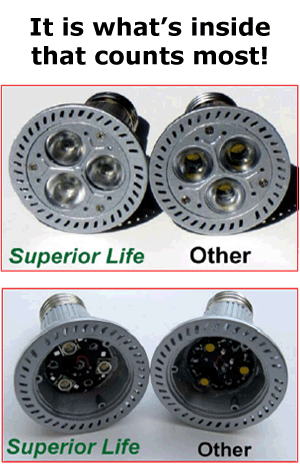
So many look alike, how do I know what is best for me?
This can be a daunting task when faced with so many different prices on LED lamps. Every
day manufacturers are surfacing, that promise to deliver high quality LED products, but may
only disappoint you. When a manufacturer (Many whom you have never heard of) wants to
bring to market an LED lamp, they will out source components from China. This reduces
the cost of having to create tooling for the lamp body. Often times these lamps may have the
exact same outer appearance. It is what's inside that matters most. Low power LED's
housed in a high power LED outer shell, are still low power. When a consumer sees what
by all outer appearances is a high power led but carries a much lower price, you can be
assured you are getting what you have paid for. When purchasing LED products, it is
assuring to purchase lamps where you are issued a Brand Name product from a company
with firm roots in the United States, such as Halco, Superior Life, and many more from
major distributors. This is of extreme importance because you need to have consumer
recourse if a product should fail prematurely. Online companies offering really great pricing
often import these lamps through the mail from China. In that circumstance, you as a
consumer have little to no recourse should a problem ever arise, nor can you trust that you
are truly getting a high power LED product that you can depend on for years to come.
day manufacturers are surfacing, that promise to deliver high quality LED products, but may
only disappoint you. When a manufacturer (Many whom you have never heard of) wants to
bring to market an LED lamp, they will out source components from China. This reduces
the cost of having to create tooling for the lamp body. Often times these lamps may have the
exact same outer appearance. It is what's inside that matters most. Low power LED's
housed in a high power LED outer shell, are still low power. When a consumer sees what
by all outer appearances is a high power led but carries a much lower price, you can be
assured you are getting what you have paid for. When purchasing LED products, it is
assuring to purchase lamps where you are issued a Brand Name product from a company
with firm roots in the United States, such as Halco, Superior Life, and many more from
major distributors. This is of extreme importance because you need to have consumer
recourse if a product should fail prematurely. Online companies offering really great pricing
often import these lamps through the mail from China. In that circumstance, you as a
consumer have little to no recourse should a problem ever arise, nor can you trust that you
are truly getting a high power LED product that you can depend on for years to come.
Can LED replace just about any bulb?
Unlike a filament from an incandescent lamp, an arc-tube from a HID lamp, or the phosphor on a fluorescent tube, the
emission of light from an LED is not Omnidirectional; that is it does not radiate in all directions uniformly. It is difficult to
project light through a circuit board and heat sink, so the light from an LED is emitted from the top of the chip. This means at a
theoretical best, an LED can project light in a hemispherical pattern, in reality most bare LED chips project light in a 120 to 140
degree cone. While there are some experiments in laboratories utilizing transparent substrates that may be able to further
expand this distribution, these are not commercially available at this time and if and when they are, there would still be the
limitation of the mounting surface and heat sinking attachment. This is why there is not currently a true “A” lamp
replacement using LED technology. There are some novel methods that are producing more acceptable distributions for an
omni-directional light source out of an LED, they are difficult and still suffer limitations in how much light is possible and can
suffer in efficiency, depending on the approach. The most that is typically possible of an “A” lamp like LED is a distribution
pattern similar to an R-type reflector lamp, directional but broad and relatively even. Despite these limitations, there are uses
for a higher efficiency, long lived directional light source, and products can be made to take advantage of this.
emission of light from an LED is not Omnidirectional; that is it does not radiate in all directions uniformly. It is difficult to
project light through a circuit board and heat sink, so the light from an LED is emitted from the top of the chip. This means at a
theoretical best, an LED can project light in a hemispherical pattern, in reality most bare LED chips project light in a 120 to 140
degree cone. While there are some experiments in laboratories utilizing transparent substrates that may be able to further
expand this distribution, these are not commercially available at this time and if and when they are, there would still be the
limitation of the mounting surface and heat sinking attachment. This is why there is not currently a true “A” lamp
replacement using LED technology. There are some novel methods that are producing more acceptable distributions for an
omni-directional light source out of an LED, they are difficult and still suffer limitations in how much light is possible and can
suffer in efficiency, depending on the approach. The most that is typically possible of an “A” lamp like LED is a distribution
pattern similar to an R-type reflector lamp, directional but broad and relatively even. Despite these limitations, there are uses
for a higher efficiency, long lived directional light source, and products can be made to take advantage of this.
To better direct light coming from an LED, some products such as the ProLED from Halco use what
is called a secondary optic. This is a lens (although there are reflectors available) that attaches to
the chip holding the LED package mechanically or through adhesive and directs the light into a
different pattern (such as a narrow or a wide flood pattern). The quality of this optic affects the optical
efficiency, or the amount of light that is actually projected compared to the amount of light generated
by the LED. By taking advantage of the directional characteristic of LEDs, and using high quality
optics, effective general lighting can be achieved with LED high power lamps.
is called a secondary optic. This is a lens (although there are reflectors available) that attaches to
the chip holding the LED package mechanically or through adhesive and directs the light into a
different pattern (such as a narrow or a wide flood pattern). The quality of this optic affects the optical
efficiency, or the amount of light that is actually projected compared to the amount of light generated
by the LED. By taking advantage of the directional characteristic of LEDs, and using high quality
optics, effective general lighting can be achieved with LED high power lamps.

How do LED's produce good color?
There are no true white LEDs that are commercially viable. Every type of material used in the chip part of the LED that produces
light generates a color, but none of those colors are white. All LEDs produce a color, red, green, yellow, or blue (note that IR
and UV LEDs do exist as well). The two methods for generating white light are to either use multiple LED chips and mix the
light, or to use a phosphor with a single color light (usually blue) to generate white light.
light generates a color, but none of those colors are white. All LEDs produce a color, red, green, yellow, or blue (note that IR
and UV LEDs do exist as well). The two methods for generating white light are to either use multiple LED chips and mix the
light, or to use a phosphor with a single color light (usually blue) to generate white light.
The color mixing method is (with current technology) less efficient, particularly in a high power setting, but through the use of
advanced controls does allow virtually any color to be produced by varying the intensity of the multiple LEDs. If the efficiency
gap of utilizing green LED die material at high currents is solved, there is significant potential in this method.
advanced controls does allow virtually any color to be produced by varying the intensity of the multiple LEDs. If the efficiency
gap of utilizing green LED die material at high currents is solved, there is significant potential in this method.
The phosphor coating method is currently much more efficient at producing light. This coating process does have limitations
as well, and that is in the variation in color temperature and chromaticity. The phosphor coating composition and thickness
affect the color temperature, color rendering, and light output. In addition to this, the phosphors have a ‘response curve’, which
means that the exact wavelength of the blue LED die used in this package will have an impact on the final light output as well.
Generally speaking, warmer color temperature LED packages will have more of the phosphor coating than a cooler color
temperature LED. Additionally, some companies use the addition of a red phosphor as well to help with the color quality and
color rendering. Increasing phosphor thickness and adding an additional phosphor, unlike fluorescent lamps, will lower the
output of the LED package, as while these phosphors are very efficient, they are not 100% efficient, do produce some losses,
and can have an impact on thermal management. To deal with these manufacturing variations, manufacturers of LED
packages will divide their products up into “bins” which will have a defined range of characteristics. By selecting a bin, the
resulting product will fall within a reasonably predictable range of color and performance characteristics. While the bins
offered by manufacturers of LED packages are getting smaller, there can still be variation in the color characteristics between
production runs. These are the trade-offs of using phosphors to produce white light.
as well, and that is in the variation in color temperature and chromaticity. The phosphor coating composition and thickness
affect the color temperature, color rendering, and light output. In addition to this, the phosphors have a ‘response curve’, which
means that the exact wavelength of the blue LED die used in this package will have an impact on the final light output as well.
Generally speaking, warmer color temperature LED packages will have more of the phosphor coating than a cooler color
temperature LED. Additionally, some companies use the addition of a red phosphor as well to help with the color quality and
color rendering. Increasing phosphor thickness and adding an additional phosphor, unlike fluorescent lamps, will lower the
output of the LED package, as while these phosphors are very efficient, they are not 100% efficient, do produce some losses,
and can have an impact on thermal management. To deal with these manufacturing variations, manufacturers of LED
packages will divide their products up into “bins” which will have a defined range of characteristics. By selecting a bin, the
resulting product will fall within a reasonably predictable range of color and performance characteristics. While the bins
offered by manufacturers of LED packages are getting smaller, there can still be variation in the color characteristics between
production runs. These are the trade-offs of using phosphors to produce white light.
Some light quality advantages they have are that the spectrum of a white phosphor based LED is much smoother than a
compact fluorescent lamp (providing light emission over a broad range of spectrum), and is capable of providing high quality
light. In additional comparisons to CFL technology, an LED product can achieve instant full brightness, and is unaffected by
switching, all without the use of mercury. RGB based white lights can be used to create dramatic color changing effects.
compact fluorescent lamp (providing light emission over a broad range of spectrum), and is capable of providing high quality
light. In additional comparisons to CFL technology, an LED product can achieve instant full brightness, and is unaffected by
switching, all without the use of mercury. RGB based white lights can be used to create dramatic color changing effects.
An advantage that LED products have over equivalent halogen lamps is tremendous energy savings, and a beam that
projects neither heat nor UV radiation, making LEDs a safe product to use when highlighting without concern of
overheating or fading of the product.
Lifespan
The long life of properly designed LED products makes them ideal for a situation where light failure can cost a lot of
time, effort, and money. Examples of such are high-mounted recess and track lighting, where changing the bulb could be
both dangerous and time consuming (such as in a hotel lobby, or in the atrium of a building). With upwards of 60,000
hour useful lifespan in LED products, years of trouble free lighting can be achieved, easily saving money in labor and
replacement costs for the equivalent of three to four CFL changes, or ten to fifteen halogen lamp changes. Useful
lifespan is defined as when the LEDs depreciate to 70% of their initial output, in lumens. The lamp will continue
to operate far beyond that, but with additional lumen depreciation.
Energy Savings
Compare for example, a 75 Watt halogen lamp producing 1000 lumens of light. This type of lamp operates at a
consumption rate or LPW (lumens per watt) of 13.3. In using a direct replacement LED product it only takes on average
11 to 14 watts of light with a LPW rate of 90.0. In this scenario, the LED is 676% more energy efficient than Halogen,
thus resulting in an energy savings of 84%.
Product Presentation
The last thing you want when using light to highlight a point of interest is for that light to damage or impair what you are
highlighting. Whether the product is a delicate food that is sensitive to heat, a painting whose vivid details could be
dulled by UV, or a diamond ring that has to be comfortable when it comes out of the case, an LED directional light is a
great solution.
Safety
There is no glass in most LED products to break, very little heat compared to a searing halogen reflector, and no
mercury to poison the environment. When the safety of your environment (working and natural) matters to you or your
customers, a ProLED lamp is a great choice to suit your lighting needs. A lamp that won’t be in the landfill for years, won’
t poison drinking water, and won’t shatter sending slivers of glass flying. Further there is tremendous reduction in labor
costs and liability by reducing the number of times someone must work on or replace an electrical component from a
ladder.
Fixture Requirements
All of the LED products come with a mention of not using them in totally enclosed fixtures, which causes some
confusion and concern. To clarify, the term “totally enclosed” in this instance means that there is no airflow around the
LED lamp, and the reason goes back to thermal management. LEDs do generate some heat, and while not as much as
any of the other types of light, in a fixture with zero airflow, the aluminum body is unable to act as a heat-sink, and
reduces the life of the electrical components in the LED lamp. It is important to note the specific wording of "outdoor
use" on an LED product that is exposed to the elements. This means mounting or placement where water, rain and
heavy moisture build-up can occur. Use in recessed cans under walkways is acceptable in warmer, dryer climates.
projects neither heat nor UV radiation, making LEDs a safe product to use when highlighting without concern of
overheating or fading of the product.
Lifespan
The long life of properly designed LED products makes them ideal for a situation where light failure can cost a lot of
time, effort, and money. Examples of such are high-mounted recess and track lighting, where changing the bulb could be
both dangerous and time consuming (such as in a hotel lobby, or in the atrium of a building). With upwards of 60,000
hour useful lifespan in LED products, years of trouble free lighting can be achieved, easily saving money in labor and
replacement costs for the equivalent of three to four CFL changes, or ten to fifteen halogen lamp changes. Useful
lifespan is defined as when the LEDs depreciate to 70% of their initial output, in lumens. The lamp will continue
to operate far beyond that, but with additional lumen depreciation.
Energy Savings
Compare for example, a 75 Watt halogen lamp producing 1000 lumens of light. This type of lamp operates at a
consumption rate or LPW (lumens per watt) of 13.3. In using a direct replacement LED product it only takes on average
11 to 14 watts of light with a LPW rate of 90.0. In this scenario, the LED is 676% more energy efficient than Halogen,
thus resulting in an energy savings of 84%.
Product Presentation
The last thing you want when using light to highlight a point of interest is for that light to damage or impair what you are
highlighting. Whether the product is a delicate food that is sensitive to heat, a painting whose vivid details could be
dulled by UV, or a diamond ring that has to be comfortable when it comes out of the case, an LED directional light is a
great solution.
Safety
There is no glass in most LED products to break, very little heat compared to a searing halogen reflector, and no
mercury to poison the environment. When the safety of your environment (working and natural) matters to you or your
customers, a ProLED lamp is a great choice to suit your lighting needs. A lamp that won’t be in the landfill for years, won’
t poison drinking water, and won’t shatter sending slivers of glass flying. Further there is tremendous reduction in labor
costs and liability by reducing the number of times someone must work on or replace an electrical component from a
ladder.
Fixture Requirements
All of the LED products come with a mention of not using them in totally enclosed fixtures, which causes some
confusion and concern. To clarify, the term “totally enclosed” in this instance means that there is no airflow around the
LED lamp, and the reason goes back to thermal management. LEDs do generate some heat, and while not as much as
any of the other types of light, in a fixture with zero airflow, the aluminum body is unable to act as a heat-sink, and
reduces the life of the electrical components in the LED lamp. It is important to note the specific wording of "outdoor
use" on an LED product that is exposed to the elements. This means mounting or placement where water, rain and
heavy moisture build-up can occur. Use in recessed cans under walkways is acceptable in warmer, dryer climates.
Why should I choose LED over Halogen, Incandescent or CFL?
LED Drawbacks All of the aforementioned benefits of LED based lighting products do not come without a price. One of the
largest drawbacks of LED based products is literally the price. High quality LED packages, with predictable and reliable color
quality and output, are still very expensive when considering their initial cost on a lumen per watt basis. Using more LED
packages will generally result in a better efficiency, but is then tempered by the fact that it adds considerably to the product
cost. An LED lighting product is essentially an electrical appliance that produces light, and is more complex than many other
sources. In addition to the LEDs themselves, the aluminum heat sinks, printed circuit boards, drivers, and optical control
devices are all relatively expensive components to produce. Improvements in LED efficiency has the potential to reduce the
overall initial cost, and as demand increases, economies of scale will likely bring the initial cost of LED products down over
time, but they are unlikely to ever be as initially inexpensive as older, simpler, but much less efficient incandescent
technology. Their long life requires a different approach to considering cost, where cost of ownership over time. When
considering the purchase of LED, you must take into account the number of Incandescent or Halogen lamps one would buy
to cover the same time period (60,000 hours), the energy and labor maintenance savings in total. Often consumers will find
that the LED, though a higher upfront cost, yields a return on investment measured well over 600%.
The second main drawback of LED based products is that they are much more sensitive to heat buildup than many other
technologies. There are many applications where LEDs may still be inappropriate at the current time, where the ambient
temperature is high enough that the long life of an LED product would be compromised significantly. Most LED products
cannot be totally enclosed unless very low wattage or specifically designed for this application, and this includes many of the
insulated recessed can lights.
Despite the drawbacks or challenges in LED lighting technology, they have significant potential to change the landscape of
lighting forever, and in dramatic ways that far exceed the flexibility of any other commercially available lighting technology.
largest drawbacks of LED based products is literally the price. High quality LED packages, with predictable and reliable color
quality and output, are still very expensive when considering their initial cost on a lumen per watt basis. Using more LED
packages will generally result in a better efficiency, but is then tempered by the fact that it adds considerably to the product
cost. An LED lighting product is essentially an electrical appliance that produces light, and is more complex than many other
sources. In addition to the LEDs themselves, the aluminum heat sinks, printed circuit boards, drivers, and optical control
devices are all relatively expensive components to produce. Improvements in LED efficiency has the potential to reduce the
overall initial cost, and as demand increases, economies of scale will likely bring the initial cost of LED products down over
time, but they are unlikely to ever be as initially inexpensive as older, simpler, but much less efficient incandescent
technology. Their long life requires a different approach to considering cost, where cost of ownership over time. When
considering the purchase of LED, you must take into account the number of Incandescent or Halogen lamps one would buy
to cover the same time period (60,000 hours), the energy and labor maintenance savings in total. Often consumers will find
that the LED, though a higher upfront cost, yields a return on investment measured well over 600%.
The second main drawback of LED based products is that they are much more sensitive to heat buildup than many other
technologies. There are many applications where LEDs may still be inappropriate at the current time, where the ambient
temperature is high enough that the long life of an LED product would be compromised significantly. Most LED products
cannot be totally enclosed unless very low wattage or specifically designed for this application, and this includes many of the
insulated recessed can lights.
Despite the drawbacks or challenges in LED lighting technology, they have significant potential to change the landscape of
lighting forever, and in dramatic ways that far exceed the flexibility of any other commercially available lighting technology.
What are the drawbacks of LED?
Special thanks to: David Nelkin; Director of Product Technologies - Halco Lighting, and Tom Gregg; Product Engineer - PQL
Lighting for assembling this information on behalf of all lighting professionals.
Lighting for assembling this information on behalf of all lighting professionals.